เหมาะสม สารช่วยกระจายตัวสำหรับเม็ดสี ช่วยให้พื้นผิวของเม็ดสีเปียก ลดการจับตัวเป็นก้อนของอนุภาคเม็ดสี ปรับปรุงประสิทธิภาพการบด และรักษาเสถียรภาพของอนุภาคเม็ดสีระหว่างการจัดเก็บ ในสูตรต่างๆ ลูกค้ามักมองหาสารช่วยกระจายตัวหรือสารเคมีช่วยกระจายตัวที่เหมาะสม และเปรียบเทียบกับสารอ้างอิงที่เป็นที่รู้จักกันดี เช่น MOWIPLUS XW 330, SOLPLUS, SOLSPERSE 24000, SOLSPERSE 32500, SOLSPERSE 16000, SOLSPERSE 5000, SOLSPERSE 8000 หรือ BYK 9076 ชื่อรุ่นที่แสดงในที่นี้ใช้สำหรับการอ้างอิงทางเทคนิคเท่านั้นที่ iSuoChem เราไม่ได้จำหน่ายสินค้าแบรนด์แท้ เราจัดหาสารช่วยกระจายตัวรุ่นที่เทียบเท่าและสารละลายช่วยกระจายตัวทางเลือกอื่นๆ ตามความต้องการใช้งาน
MOWIPLUS XW 330 ถูกกล่าวถึงในเอกสารอ้างอิงทางเทคนิคสาธารณะว่าเป็นสารช่วยให้เปียกและกระจายตัวประเภทเกลือแอมโมเนียมของกรดโพลีอะคริลิกสำหรับสารเคลือบผิว ส่วน BYK-9076 ถูกจัดอยู่ในกลุ่มสารเติมแต่งช่วยให้เปียกและกระจายตัวแบบปราศจากตัวทำละลายสำหรับระบบที่มีตัวทำละลายและไม่มีตัวทำละลาย รวมถึงสารเคลือบผิว กาว พลาสติซอลพีวีซี และมาสเตอร์แบทช์สี สารกระจายตัวแบบโซลสเปอร์สถูกนำมาใช้กันอย่างแพร่หลายในตัวกลางอินทรีย์เหลวในฐานะสารกระจายตัวของเม็ดสีและเพื่อเพิ่มความเสถียร
คำชี้แจงความสำคัญ:
ชื่อแบรนด์และหมายเลขรุ่นดั้งเดิมทั้งหมดที่ใช้ในบทความนี้ใช้เพื่อการอ้างอิงเท่านั้น สำหรับการเปรียบเทียบทางเทคนิคและการค้นหาของลูกค้า iSuoChem ไม่ได้อ้างว่าผลิตภัณฑ์ของตนเป็นผลิตภัณฑ์แบรนด์ดั้งเดิม เราเพียงแต่เสนอผลิตภัณฑ์ที่เทียบเท่าและสารกระจายตัวทางเลือกเท่านั้น
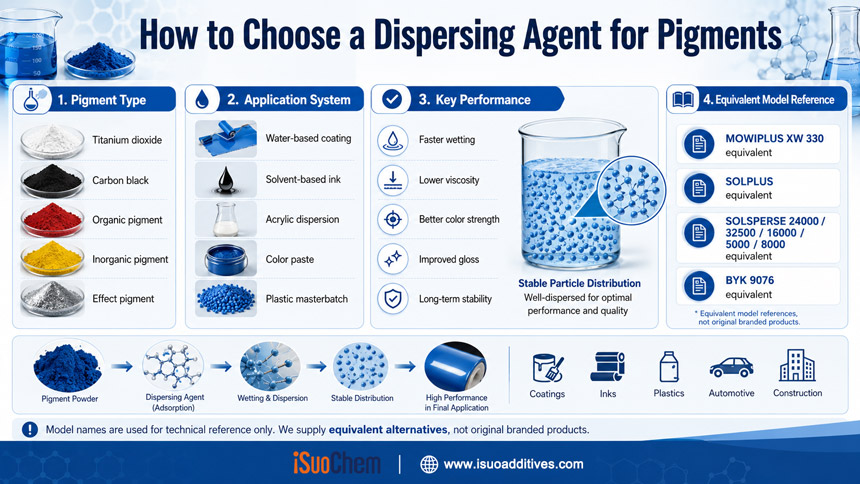
รูปที่ 1: กลไกการทำงานของสารช่วยกระจายตัวในกระบวนการกระจายตัวของเม็ดสี
สารช่วยกระจายตัวคืออะไร?
สารช่วยกระจายตัวเป็นสารเติมแต่งที่มีคุณสมบัติในการสลายอนุภาคสีและป้องกันไม่ให้อนุภาคจับตัวเป็นก้อนอีกครั้ง กระบวนการกระจายตัวของสีเกี่ยวข้องกับการใช้แรงทางกลเพื่อสลายผงสี แต่หากไม่มีสารช่วยกระจายตัวที่เหมาะสม อนุภาคละเอียดเหล่านั้นจะจับตัวเป็นก้อนได้ง่ายอีกครั้ง
สารเคมีที่ช่วยกระจายตัวที่ดีมักมีหน้าที่สำคัญสามประการดังนี้:
การทำให้เปียก
มันช่วยให้ของเหลวที่เป็นตัวกลางเข้าไปแทนที่อากาศบนพื้นผิวของเม็ดสี
รองรับการเจียร
ช่วยลดขนาดอนุภาคได้อย่างมีประสิทธิภาพมากขึ้นในระหว่างกระบวนการบด
การรักษาเสถียรภาพ
ช่วยให้เม็ดสีมีการกระจายตัวอย่างสม่ำเสมอทั้งในระหว่างการจัดเก็บและการใช้งาน
และนี่คือเหตุผลว่าทำไมการเลือกสารช่วยกระจายตัวที่เหมาะสมสำหรับเม็ดสีในสีผสมอาหาร สีทา หมึก ระบบกระจายตัวของอะคริลิก และการผลิตมาสเตอร์แบทช์จึงมีความสำคัญอย่างยิ่ง
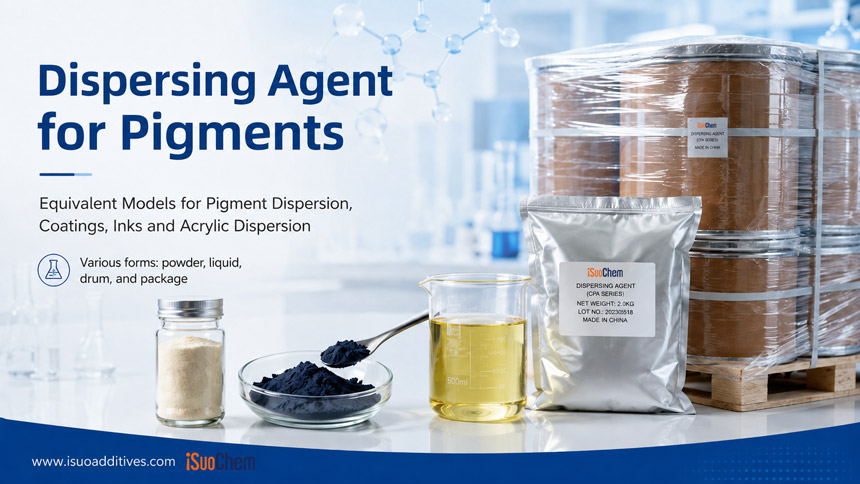
รูปที่ 2: สารกระจายตัวมีลักษณะอย่างไร?
เหตุใดการกระจายตัวของเม็ดสีจึงมีความสำคัญ
ปัญหามากมายในกระบวนการผลิตและผลิตภัณฑ์ขั้นสุดท้ายอาจเกิดจากการกระจายตัวของเม็ดสีที่ไม่ดี
| ปัญหาการกระจายตัว | ผลลัพธ์ที่เป็นไปได้ | สารช่วยกระจายตัวทำงานอย่างไร |
|---|
| การรวมตัวของเม็ดสี | ความเข้มของสีต่ำ | ช่วยเพิ่มประสิทธิภาพการแยกอนุภาค |
| การเปียกชื้นไม่ดี | ใช้เวลาในการบดนาน | ช่วยเร่งการเปียกของเม็ดสี |
| การตกตะกอน | ลอยตัว น้ำท่วม เปลี่ยนสี | ช่วยเพิ่มความเสถียรในการจัดเก็บ |
| ความหนืดสูง | ยากต่อการประมวลผล | ลดความหนืดของฐานรองเครื่องบด |
| ความเงางามต่ำ | พื้นผิวเคลือบด้าน | ช่วยปรับปรุงการกระจายตัวของเม็ดสี |
| การตกตะกอน | สูตรนี้ไม่เสถียร | ส่งเสริมเสถียรภาพในระยะยาว |
สารช่วยกระจายตัวที่ดีสามารถลดต้นทุนการผลิต ปรับปรุงความสม่ำเสมอของผลิตภัณฑ์ และทำให้การกระจายตัวของเม็ดสีมีประสิทธิภาพมากขึ้น
แนวทางการคัดเลือกและแบบจำลองอ้างอิงมาตรฐาน
ชื่อเหล่านี้เป็นที่รู้จักกันดีในด้านสีเคลือบ หมึกพิมพ์ พลาสติก และระบบกระจายเม็ดสี และลูกค้าจำนวนมากมองหา MOWIPLUS XW 330, SOLPLUS, SOLSPERSE 24000, SOLSPERSE 32500, SOLSPERSE 16000, SOLSPERSE 5000, SOLSPERSE 8000 และ BYK 9076
iSuoChem ไม่ได้จำหน่ายผลิตภัณฑ์แบรนด์แท้ สำหรับแต่ละการใช้งาน เราขอแนะนำรุ่นที่เทียบเท่ากันโดยพิจารณาจากระบบสูตร ชนิดของเม็ดสี ชนิดของตัวทำละลาย ความเข้ากันได้กับเรซิน และการใช้งานขั้นสุดท้าย
| แบบจำลองอ้างอิง | คำหลัก | ทิศทางการใช้งานทั่วไป | ตำแหน่งงานด้านการจัดหาของ iSuoChem |
|---|
| โมวิพลัส เอ็กซ์ดับเบิ้ลยู 330 | สีเคลือบชนิดน้ำ สีอิมัลชัน เม็ดสีอนินทรีย์ สารเติมเต็ม | มีแบบจำลองตัวแทนกระจายตัวที่เทียบเท่ากัน | ติดต่อเรา |
ซีรี่ส์ SOLPLUS | สารเคลือบ หมึกพิมพ์ ระบบตัวทำละลายหรือเรซิน สารกระจายตัวของเม็ดสี | มีสารละลายกระจายตัวทางเลือกอื่นให้เลือกใช้ | ดอทสเปอร์ส 3204P |
| โซลสเปอร์ส® 24000 | สื่ออินทรีย์, สารเคลือบ, หมึกพิมพ์, สารกระจายตัวของเม็ดสีประสิทธิภาพสูง | แบบจำลองสำหรับการประเมินทางเทคนิคที่เทียบเท่ากัน | ดอทสเปอร์ส 24000 |
| โซลสเปอร์ส 32500 | สีเคลือบสำหรับยานยนต์และอุตสาหกรรม สารอินทรีย์เหลว | แบบจำลองเทียบเท่าสำหรับระบบตัวทำละลาย | ดอทสเปอร์ส 3204/3206 |
| โซลสเปอร์ส 16000 | การกระจายตัวของเม็ดสีในหมึกพิมพ์และสารเคลือบ | การเลือกแบบจำลองสารกระจายตัวทางเลือก | ติดต่อเรา |
| โซลสเปอร์ส 5000 | ระบบเม็ดสีที่มีตัวเสริมฤทธิ์ | ตัวเลือกสารเติมแต่งสนับสนุนแบบเดียวกัน | ดอทสเปอร์ส 2050 |
| โซลสเปอร์ส 8000 (22) | สารช่วยคงสภาพและกระจายตัวของเม็ดสี | แบบจำลองทางเลือกสำหรับการทดสอบสูตร | ติดต่อเรา |
| BYK 9076 | สีเคลือบแบบใช้ตัวทำละลาย สีเคลือบแบบไม่ใช้ตัวทำละลาย พลาสติซอลพีวีซี คาร์บอนแบล็ก มาสเตอร์แบทช์ | มีสารเติมแต่งที่ช่วยในการเปียกและกระจายตัวที่เทียบเท่ากัน | ติดต่อเรา |
ในข้อมูลผลิตภัณฑ์ของ BYK เอง สารเติมแต่งที่ช่วยในการเปียกและการกระจายตัวถูกอธิบายว่าเป็นสารเติมแต่งที่สนับสนุนการกระจายตัวของอนุภาคของแข็งในตัวกลางที่เป็นของเหลวและความเสถียรในระยะยาว นอกจากนี้ BYK-9076 ยังถูกอธิบายอย่างเป็นทางการว่า "แนะนำเป็นพิเศษสำหรับมาสเตอร์แบทช์สีและเม็ดสีคาร์บอนแบล็ก"
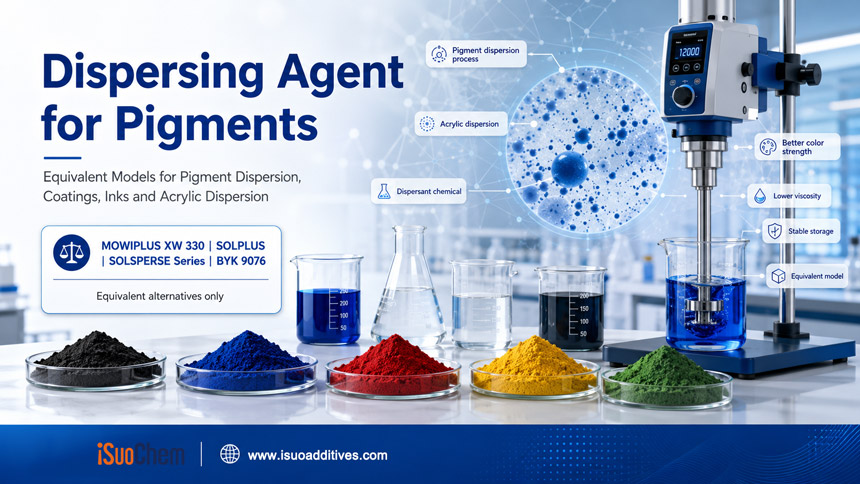
รูปที่ 3: ขั้นตอนการกระจายตัวของเม็ดสีโดยใช้สารช่วยกระจายตัว
วิธีเลือกสารช่วยกระจายตัวที่เหมาะสมสำหรับเม็ดสี
สารช่วยกระจายตัวนั้นมีคุณสมบัติเฉพาะสำหรับระบบสีแต่ละชนิด สารช่วยกระจายตัวที่ใช้ได้ดีกับไทเทเนียมไดออกไซด์ อาจไม่เหมาะกับคาร์บอนแบล็ก สีแดงอินทรีย์ สีมุก หรือสีเรืองแสง
1. เลือกตามประเภทของระบบ
| ประเภทระบบ | ทิศทางการกระจายตัวที่ต้องการ |
|---|
| สารเคลือบชนิดน้ำ | โพลีอะคริเลตหรือสารช่วยกระจายตัวที่เข้ากันได้กับน้ำ |
| หมึกสำหรับตัวทำละลาย | สารช่วยกระจายตัวแบบพอลิเมอร์หรือสารช่วยกระจายตัวประสิทธิภาพสูงที่เทียบเท่า |
| การกระจายตัวของอะคริลิก | สารช่วยกระจายตัวในน้ำ เข้ากันได้ดีกับเรซิน |
| สีผสมอาหาร | สารช่วยกระจายตัวสำหรับเพิ่มประสิทธิภาพการเปียกและการคงตัวของเม็ดสี |
| มาสเตอร์แบทช์พลาสติก | สารช่วยกระจายตัวที่เหมาะสมสำหรับการใช้งานร่วมกับเรซินและเม็ดสี |
| ระบบคาร์บอนแบล็ก | สารช่วยกระจายตัวที่มีการดูดซับสูงและป้องกันการจับตัวเป็นก้อน |
ตัวอย่างเช่น ระบบสารกระจายตัวของอะคริลิกโดยทั่วไปจำเป็นต้องมีความเข้ากันได้ดีกับอิมัลชันอะคริลิกหรือเรซินอะคริลิก สารกระจายตัวไม่ควรทำให้เกิดฟองมากเกินไป ความหนืดเพิ่มขึ้น ความเงาต่ำ หรือความไม่เสถียรในการจัดเก็บ
2. กรองตามประเภทเม็ดสี
| ประเภทของเม็ดสี | ความท้าทายหลัก | ข้อกำหนดเกี่ยวกับสารกระจายตัว |
|---|
| ไทเทเนียมไดออกไซด์ | การบรรจุสูง การจัดการความหนืด | มีคุณสมบัติในการเปียกที่ดีและมีความหนืดต่ำ |
| คาร์บอนแบล็ค | การเปียกยาก พื้นที่ผิวสูง | การดูดซับและการรักษาเสถียรภาพที่แข็งแกร่ง |
| เม็ดสีอินทรีย์ | การตกตะกอน การลอยตัว การเคลื่อนตัวของสี | สารช่วยกระจายตัวหรือสารเสริมฤทธิ์ที่เป็นพอลิเมอร์ |
| เม็ดสีเหล็กออกไซด์ | การตกตะกอน การทำให้ข้น | เข้ากันได้ดีกับสีย้อมอนินทรีย์ |
| เม็ดสีมุก | ความเสี่ยงต่อความเสียหายของพื้นผิว | การเปียกชื้นเล็กน้อยและการกระจายตัวแบบแรงเฉือนต่ำ |
| เม็ดสีเรืองแสง | ความเข้มและความคงตัวของสี | สารช่วยกระจายตัวที่เข้ากันได้ กระบวนการแปรรูปที่ไม่รุนแรง |
3. เลือกตามเป้าหมายการผลิต
| เป้าหมายการผลิต | การเลือกสารกระจายตัวที่เน้นเป็นพิเศษ |
|---|
| ลดเวลาในการบด | การเปียกอย่างรวดเร็วและการลดความหนืด |
| สีสันที่เข้มข้นยิ่งขึ้น | การลดขนาดอนุภาคที่ดียิ่งขึ้น |
| ความเสถียรในการจัดเก็บที่ดียิ่งขึ้น | การรักษาเสถียรภาพเชิงสเตอริกหรือไฟฟ้าสถิตที่แข็งแรง |
| ราคาสารกระจายตัวลดลง | แบบจำลองเทียบเท่าทางเศรษฐกิจ |
| ความเงางามที่ดียิ่งขึ้น | ความสม่ำเสมอของการกระจายตัวของอนุภาคสี |
| ลดการตกตะกอน | มีฤทธิ์ป้องกันการตกตะกอนอย่างมีประสิทธิภาพ |
ผู้ซื้อจำนวนมากมองหา ราคาสารกระจายตัว หรือราคาของสารช่วยกระจายตัว แต่ราคาไม่ควรถูกตัดสินจากต้นทุนต่อกิโลกรัมเพียงอย่างเดียว สารช่วยกระจายตัวที่มีประสิทธิภาพมากขึ้นอาจหมายถึงปริมาณการใช้ที่น้อยลง เวลาในการบดที่สั้นลง ความเสถียรที่ดีขึ้น และความเสี่ยงต่อความล้มเหลวของล็อตการผลิตที่ลดลง
กระบวนการกระจายเม็ดสี ขั้นตอนพื้นฐาน
โดยทั่วไป กระบวนการกระจายสีจะประกอบด้วยขั้นตอนหลักสี่ขั้นตอน:
| ขั้นตอน | กระบวนการ | วัตถุประสงค์ |
|---|
| 1 | การผสมล่วงหน้า | เรซิน + ตัวทำละลายหรือน้ำ + สารช่วยกระจายตัว + ส่วนผสม |
| 2 | การเปียกของเม็ดสี | สารช่วยให้เปียกสำหรับกระจายเม็ดสี |
| 3 | การบด / การโม่ | สลายกลุ่มเม็ดสี |
| 4 | การรักษาเสถียรภาพ | ป้องกันการจับตัวเป็นก้อนซ้ำระหว่างการเก็บรักษา |
ขั้นตอนการทำงานง่าย
ตัวกลางเหลว + เรซิน + สารช่วยกระจายตัว → การเปียกของเม็ดสี → การบด → การลดขนาดอนุภาค → การกระจายตัวของเม็ดสีที่เสถียร
จำเป็นต้องเติมสารช่วยกระจายตัวหลายชนิดก่อนการบดสีเพื่อให้ได้ประสิทธิภาพสูงสุด เนื่องจากสารช่วยกระจายตัวเหล่านี้สามารถดูดซับลงบนพื้นผิวของสีในระหว่างขั้นตอนการบด เอกสารทางเทคนิคบางฉบับสำหรับ BYK-9076 แนะนำให้ผสมสารช่วยกระจายตัวลงในส่วนผสมพื้นฐานก่อนการเติมสีเพื่อให้ได้ประสิทธิภาพสูงสุด
ต้นทุนของสารช่วยกระจายตัว – ราคาเท่าไหร่?
ราคาของสารช่วยกระจายตัวหรือสารกระจายตัวนั้นขึ้นอยู่กับหลายปัจจัย
| ปัจจัยด้านราคา | คำอธิบาย |
|---|
| เนื้อหาแบบแอคทีฟ | ปริมาณสารออกฤทธิ์ที่สูงขึ้นอาจส่งผลให้ปริมาณยาที่ใช้จริงลดลง |
| โครงสร้างทางเคมี | โดยทั่วไปแล้ว สารช่วยกระจายตัวประเภทพอลิเมอร์จะมีราคาแพงกว่าสารช่วยกระจายตัวแบบธรรมดา |
| ระบบแอปพลิเคชัน | จำเป็นต้องใช้เคมีที่แตกต่างกันสำหรับระบบที่ใช้น้ำเป็นตัวทำละลาย ระบบที่ใช้ตัวทำละลาย ระบบยูวี ระบบกระจายตัวของอะคริลิก หรือระบบมาสเตอร์แบทช์ |
| ปัญหาเกี่ยวกับเม็ดสี | ผงคาร์บอนแบล็กและสีอินทรีย์มักต้องการสารช่วยกระจายตัวที่มีประสิทธิภาพสูงกว่า |
| เป้าหมายผลการปฏิบัติงาน | ผลิตภัณฑ์ที่มีความเงางามสูง ความหนืดต่ำ สีสันสดใส และคงตัวในระยะยาว อาจต้องการสารช่วยกระจายตัวคุณภาพสูงกว่า |
| แบบจำลองเทียบเท่า | โมเดลทางเลือกสามารถลดต้นทุนได้ในขณะที่ยังคงรักษาประสิทธิภาพไว้ได้ |
"สำหรับลูกค้าที่ใช้ผลิตภัณฑ์ที่มีตราสินค้า เช่น สารกระจายตัว BYK, สารกระจายตัว SOLSPERSE, SOLPLUS หรือ โมวิพลัส เอ็กซ์ดับเบิ้ลยู 330โมเดลที่เทียบเท่ากันอาจเป็นทางเลือกที่ใช้งานได้จริงเมื่อเป้าหมายคือการเพิ่มประสิทธิภาพและลดต้นทุน
เหตุใดคุณจึงควรเลือกใช้สารช่วยกระจายตัวที่เทียบเท่ากับ iSuoChem?
iSuoChem - วัตถุดิบสำหรับเม็ดสี หมึกพิมพ์ สารเคลือบ พลาสติก และระบบเคมีที่เกี่ยวข้อง เราสามารถช่วยแนะนำรุ่นที่เทียบเท่าที่เหมาะสมตามความต้องการสูตรจริงสำหรับลูกค้าที่ต้องการสารช่วยกระจายตัวสำหรับเม็ดสี
สิ่งที่ iSuoChem สามารถนำเสนอได้:
| ความต้องการของลูกค้า | โซลูชัน iSuoChem |
|---|
| ต้องการอุปกรณ์ทดแทน MOWIPLUS XW 330 | แนะนำสารช่วยกระจายตัวในน้ำที่เทียบเท่ากัน |
| ต้องใช้ SOLSPERSE 24000 / 32500 / 16000 ที่เทียบเท่ากัน | เสนอทางเลือกอื่นนอกเหนือจากสารกระจายตัวโพลีเมอร์ |
| ต้องการสารเทียบเท่า SOLSPERSE 5000/8000 | แนะนำตัวเลือกสารเสริมฤทธิ์หรือสารช่วยกระจายตัวเพิ่มเติม |
| ต้องการอะไรที่คล้ายกับ BYK 9076 | แนะนำสารเติมแต่งทางเลือกอื่นๆ ที่ไม่มีตัวทำละลาย หรือมีตัวทำละลาย เพื่อช่วยในการเปียกและกระจายตัว |
| ต้องการสารกระจายตัวราคาถูกลง | ให้แบบจำลองที่เทียบเท่าทางเศรษฐกิจ |
| ช่วยในกระบวนการกระจายเม็ดสี | ให้คำแนะนำเกี่ยวกับการกำหนดสูตรและตัวอย่างคำแนะนำในการทดสอบ |
บทสรุป
การเลือกสารช่วยกระจายตัวที่เหมาะสมสำหรับเม็ดสีเป็นกุญแจสำคัญต่อคุณภาพที่ดีของสีเคลือบ หมึกพิมพ์ และสีผสมอาหาร สารช่วยกระจายตัวที่ดีจะช่วยในการเปียก การบด และความเสถียรในระยะยาว แม้ว่าลูกค้าจำนวนมากจะมองหาแบรนด์ที่มีชื่อเสียง เช่น BYK, SOLSPERSE หรือ MOWIPLUS แต่รุ่นอื่นๆ ที่เทียบเท่ากันก็สามารถให้ประสิทธิภาพที่ใกล้เคียงกันในราคาที่คุ้มค่ากว่าได้
iSuoChem นำเสนอสารช่วยกระจายตัวทางเลือกที่เหมาะสมกับประเภทของระบบ ประเภทของเม็ดสี และเป้าหมายการผลิตของคุณ ติดต่อเราเพื่อค้นหาสารช่วยกระจายตัวที่เหมาะสมกับความต้องการของคุณ
คำถามที่พบบ่อย (คำถามที่คนถามบ่อยที่สุด)
1. สารลดแรงตึงผิวและสารช่วยกระจายตัวแตกต่างกันอย่างไร?
สารช่วยให้เปียกช่วยให้ของเหลวซึมเข้าสู่พื้นผิวของเม็ดสีได้ง่ายขึ้น สารช่วยกระจายตัวไม่เพียงแต่ช่วยในการเปียกเท่านั้น แต่ยังช่วยรักษาเสถียรภาพของอนุภาคเม็ดสีหลังจากการบดอีกด้วย
2. สามารถใช้สารช่วยกระจายตัวเพียงชนิดเดียวสำหรับสีทุกชนิดได้หรือไม่?
โดยทั่วไปแล้วไม่จำเป็น ผงคาร์บอนแบล็ก ไทเทเนียมไดออกไซด์ เม็ดสีอินทรีย์ เม็ดสีอนินทรีย์ และเม็ดสีพิเศษ อาจต้องการสารช่วยกระจายตัวทางเคมีที่แตกต่างกัน
3. ฉันควรใช้อะไรในการเลือกสารช่วยกระจายตัวสำหรับสีอะคริลิกแบบกระจายตัว?
สำหรับสารกระจายตัวของอะคริลิก สารกระจายตัวควรเข้ากันได้กับอิมัลชันอะคริลิกหรือเรซินอะคริลิก ควรให้การเปียกของสีที่ดี มีความหนืดต่ำ มีเสถียรภาพในการจัดเก็บ และไม่มีผลเสียต่อประสิทธิภาพของฟิล์ม
4. ราคาของสารช่วยกระจายตัวเป็นปัจจัยที่สำคัญที่สุดหรือไม่?
ไม่ ต้นทุนที่แท้จริงควรคำนึงถึงปริมาณยา เวลาในการบด ความคงตัว ความเข้มของสี อัตราความสำเร็จของแต่ละล็อต และคุณภาพของผลิตภัณฑ์ขั้นสุดท้ายด้วย
5. คุณจำหน่ายผลิตภัณฑ์ MOWIPLUS, SOLPLUS, SOLSPERSE และ BYK ของแท้หรือไม่?
ไม่ เราไม่ได้จำหน่ายผลิตภัณฑ์แบรนด์แท้ เราจำหน่ายเฉพาะรุ่นเทียบเท่าและสารช่วยกระจายตัวทางเลือกสำหรับการประเมินทางเทคนิคเท่านั้น
— iSuoChem: พันธมิตรที่เชื่อถือได้ของคุณสำหรับสารช่วยกระจายตัวและทางเลือกอื่นๆ